Quality in Electronic Manufacturing: Our ISO 9001 Approach
Develer has recently obtained ISO 9001 certification, the international standard for quality management systems. While some may see it as a purely formal milestone, for us it represents the natural evolution of an approach we have applied for years: designing, developing, and manufacturing with method, control, and accountability.
The certification is not an endpoint, but the formalization of a path we had already begun, built on clear processes, continuous monitoring, and a concrete focus on the quality of both our work and our results.
In this article, we share the experience from the inside through the perspectives of Cristina Manneschi, Project Manager, and Alessio Balbo, Embedded Systems Engineer, who followed the entire certification process step by step.
Why did you decide to adopt ISO 9001 certification in electronic manufacturing?
C & A: We decided to adopt ISO 9001 certification when we realized that, in electronic manufacturing, quality cannot rely solely on experience or final inspection. As product complexity and the number of variants increased, we needed a system capable of delivering repeatable and predictable results, not just correcting issues after the fact.
In practical terms, ISO 9001 helped us shift our focus from “fixing problems” after production to governing processes, introducing structured risk mitigation practices across the entire supply chain. For example, we defined clear procedures to manage component changes, qualify suppliers, and standardize critical production phases, reducing unexpected issues along the line.
Another decisive aspect was decision traceability. In electronics, every choice – an assembly process, a BOM (Bill of Materials) variant, a temporary deviation – has an impact. The certification provided us with a method to make these decisions explicit, shared, and verifiable over time, including the use of Root Cause Analysis (RCA) tools when critical issues arise.
In short, we did not adopt ISO 9001 to obtain a certificate, but to build a solid foundation that enables us to grow, continuously improve, and engage with customers and suppliers in a more structured and credible way.
In practical terms, what does “quality” mean in electronic manufacturing?
A: When we talk about quality in electronic manufacturing, we primarily mean reducing unpredictability. It does not mean the complete absence of errors, which is unrealistic. It means ensuring that errors become rare, identifiable, and manageable through structured and verifiable corrective actions.
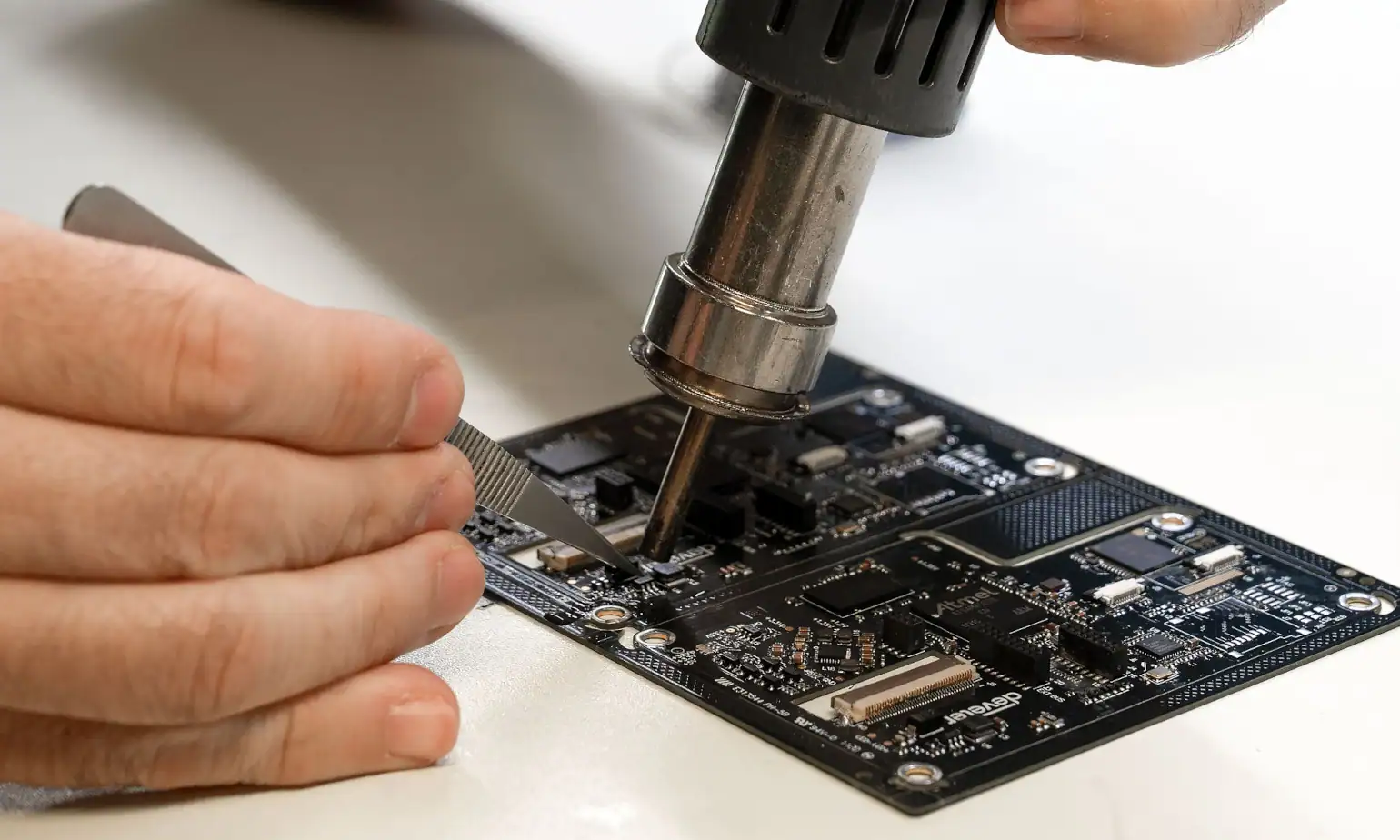
In practice, this means designing the process even before the product. For example, we do not wait for final testing to discover a soldering issue: we monitor process parameters, machine repeatability, and material qualification in order to detect deviations while they are still small and address them with targeted corrective actions.
Another example is the management of variants and components. In electronics, a seemingly equivalent component change can have significant effects. Quality means always knowing what has changed, why it has changed, and which batches are affected, preventing downstream surprises or, worse, issues reported by the customer.
When you can answer the question “why did this happen?” with data, supported by Root Cause Analysis, quality stops being an abstract concept and becomes an operational tool that enables continuous improvement and faster, more reliable decision-making.
How has ISO 9001 changed the way work is organized?
C: The introduction of ISO 9001 has mainly changed how we make decisions. In the past, many activities relied on individual experience; today, our work is built on clear, measurable, and shared processes. This has not made the organization more rigid, but more aware: we know why we do things in a certain way and how to intervene when something does not work.
Another significant change has been cultural. Quality is no longer seen as a final inspection phase, but as a responsibility distributed throughout the entire process. This has improved cross-functional collaboration, reduced operational ambiguities, and made it easier to onboard new team members, because knowledge is no longer implicit but structured.
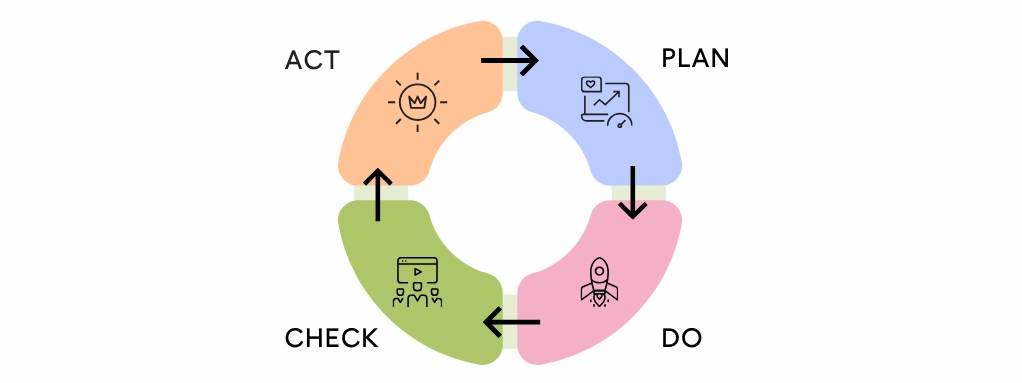
In short, ISO 9001 has transformed our work from a set of well-executed activities into a system that learns, measures itself, and improves over time.
What concrete benefits does ISO 9001 certification bring to customers?
C: For customers, the main benefit of ISO 9001 is not the label, but predictability. It means being able to rely on consistent results over time: the same quality standards, the same response times, and the same level of attention, regardless of the person or the situation.
The certification reduces risk for the customer because behind the product or service there is an organization that analyzes non-conformities through structured cause analysis, defines corrective actions, and verifies their effectiveness over time. This translates into fewer unexpected issues, greater transparency, and a more structured approach to handling requests and complaints.
In addition, customers benefit from an organization that systematically listens to feedback and turns it into concrete actions. In this sense, ISO 9001 does not guarantee that problems will never occur, but it ensures that when they do, they are managed in a timely, traceable, and solution-oriented way.
ISO 9001 is often seen as synonymous with bureaucracy. How did you avoid this risk?
A: It is true that ISO 9001 can become bureaucratic, but this happens when it is adopted passively, as a box to tick in order to obtain a certificate. In discussions with consultants and suppliers, we have seen cases where the approach was mainly document-driven: numerous procedures written to describe a large number of processes.
The result was a system that was formally compliant but poorly integrated into the company culture: procedures that were too complex or rigid, difficulty involving different functions, and rules perceived as imposed from the top down. Certification was achieved “on paper,” while actual processes continued to follow informal practices.
We chose a different path. We started by analyzing our existing processes, aware that they were already largely aligned with the standard’s requirements. We decided to document first the key processes, those that generate value and have the greatest impact on quality outcomes, avoiding excessive documentation of marginal activities.
At the beginning, formalization is unavoidable: documentation must be written, shared, and structured. The decisive step comes afterward, when the approach becomes active rather than passive. Procedures are updated when they are truly needed, for example when non-conformity analysis highlights recurring issues, gaps in controls, or organizational ambiguities. In these cases, documentation is not a constraint, but a tool to correct and improve the system.
Another fundamental element was the direct involvement of the people working on the processes every day. The rules were not imposed, but built together. This ensured that procedures remained aligned with operational reality and encouraged their natural adoption.
In this way, ISO 9001 did not become a document archive, but a dynamic system that evolves over time: we formalize what works, make experience-based best practices explicit, and intervene when data shows that something can be improved. Certification remains the framework, but the real value lies in the daily use of the quality system.
How do you measure and improve quality over time?
A: For us, quality is not a single indicator, but a system of signals. We measure it by combining operational data – such as lead times or non-conformities – with input from customers: feedback, complaints, and evolving expectations.
The key point is not simply collecting numbers, but using them. Each data point is analyzed in terms of causes, not just effects, and becomes the basis for concrete improvement actions with clearly defined responsibilities and timelines.
Over time, this approach has made continuous improvement part of everyday work: small, consistent interventions, verified through results, that prevent both complacency and late-stage corrections. In this way, quality is not something that is merely “checked,” but something that is built and sustained over time.
What are the next steps for Develer’s Quality Management System?
C: The next step for our Quality Management System is not to add complexity, but to increase value. We want quality to be even more deeply integrated into everyday decision-making, not treated as a parallel system.
We are working to make data more timely and actionable, so that we can anticipate issues rather than simply react to them. At the same time, our goal is to drive continuous improvement in the areas that have the greatest impact on customers and teams, avoiding formal interventions that do not generate real benefits.
Looking ahead, the quality system will increasingly become a tool for organizational learning: capable of supporting the company’s growth, enabling innovation, and maintaining consistency even in rapidly changing environments.